Magic Rampage
Asantee GamesRole Playing
4.68.94K Reviews
- Version
- 7.8.7
- Installs
- 10.00M
- Age Rating
- Teen
Screenshots
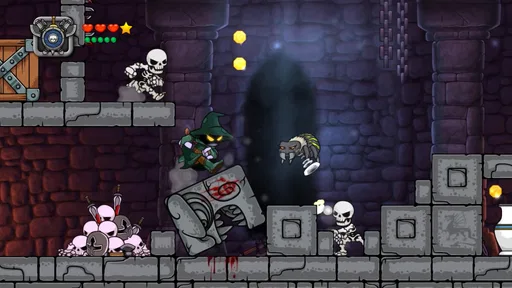
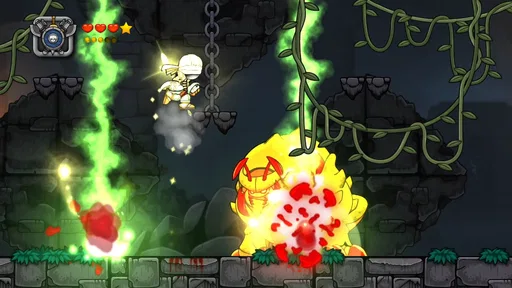
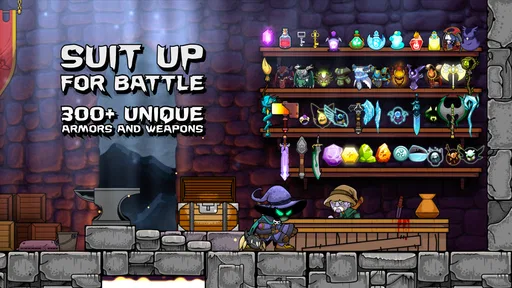
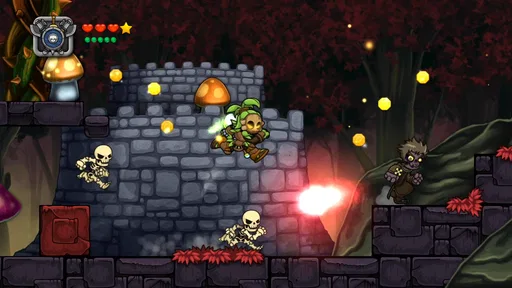
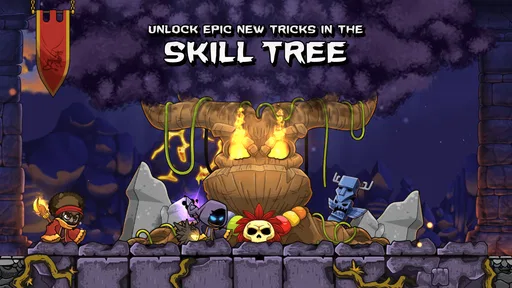
Our Review of Magic Rampage
 Analysis by Appyee
I went into Magic Rampage expecting a quick mobile action game, but it feels closer to a compact role-playing adventure built around careful platforming. The controls are easy to understand, yet the game asks for more attention than a simple tap-to-attack title. You move through dangerous stages, fight enemies, collect useful equipment, and gradually learn how to approach each room instead of charging ahead blindly.
That combination is the main reason I kept playing. It gives the game a satisfying rhythm: enter a stage, test the layout, make a mistake, adjust your timing, and eventually finish the section with a better understanding of what went wrong. It is free to play, rated Teen, and developed by Asantee Games. The store presents it as an action-packed RPG platformer, but I think that description becomes clearer once you experience how much the platforming and character-building sides depend on each other.
The game has been available since March 4, 2015, and its long life is easy to understand. It has reached over ten million installs, with an average score of 4.6 from around 773 thousand ratings. Those figures do not make it automatically perfect, but they do suggest that Magic Rampage has found a durable audience rather than being a short-lived experiment.
What the first session really feels like
The opening hours are best understood as a process of learning the game’s physical language. Movement, jumping, attacking, and avoiding danger all seem familiar if you have played a platformer before, but mobile controls change the experience. Your fingers occupy part of the screen, and a small hesitation can turn a safe landing into damage. I recommend treating the first stages as practice rather than rushing to prove that you can clear them quickly.
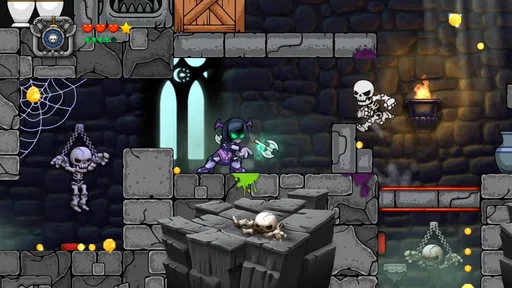
Combat is more enjoyable when you stop thinking of it as a button-mashing exercise. Enemies are placed in spaces where positioning matters. A swing made too early can leave you exposed, while a jump made without checking the landing area can create a second problem immediately after the first. I found myself watching enemy movement and stage geometry together, which gives the encounters more depth than their simple appearance suggests.
The role-playing layer gives that platforming a reason to continue. Equipment and character improvement make successful runs feel meaningful, especially after a difficult room. Instead of relying only on reflexes, you can also think about how your current setup affects the way you handle hazards and enemies. That is a useful distinction from many mobile platformers, where each attempt is mostly about repeating the same movement until it works.
At the same time, this is not a relaxed, story-first RPG. If you want long conversations, a huge open world, or a mostly automatic battle system, this is probably the wrong choice. Magic Rampage is much more focused on short, active challenges. Its appeal comes from direct control and repeated improvement, not from passively watching a hero become stronger.
Setting up your first character without overthinking it
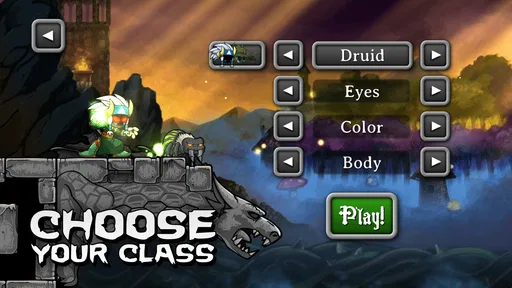
The first setup is refreshingly approachable. You do not need to understand every possible part of the game before beginning. I suggest starting with the basic controls, then paying attention to how your character feels in motion. The most useful early question is not “Which item is strongest?” but “Which setup helps me control this character comfortably?” A theoretically powerful choice is less valuable if it makes your timing feel awkward.
Because the game combines combat with platforming, equipment should be judged in context. An item that helps you defeat an enemy faster may not solve a stage where the real problem is reaching a platform safely. When you review your gear, think about the section that is stopping you. If you are losing health during fights, improve the part of your setup that supports those encounters. If you are repeatedly missing jumps, changing equipment may not be the answer; slowing down and learning the route may matter more.
One practical habit helped me avoid wasting early progress: I stopped changing everything at once. When I replaced several pieces of equipment together, it became difficult to tell what had actually improved my performance. Adjusting one meaningful part at a time made the results easier to notice. This is especially useful for a new player who might otherwise assume that every defeat requires a complete rebuild.
The game is free to download, with optional purchases listed from $1.99 to $21.99 per item. I would begin without spending anything and first decide whether the movement and combat suit you. The free starting experience is enough to reveal whether you enjoy the central loop. If you later choose to buy something, do it because you understand what kind of help you want, not because an early difficult room has made you frustrated.
Your first meaningful success
For me, the first real success was not simply reaching the end of a stage. It was finishing a troublesome section after changing my approach. I stopped jumping immediately, waited for an opening, dealt with the nearest threat, and checked the next landing before moving. That small change turned a sequence that felt chaotic into one I could repeat. It is the moment when Magic Rampage starts to make sense.
New players should use the same method. When you fail, identify the exact cause instead of labeling the whole stage as too hard. Did an enemy hit you while you were attacking? Did you jump before seeing where you would land? Did you enter a room with too little health because of an earlier mistake? Each answer points to a different solution. The game rewards this kind of diagnosis more than frantic retries.
A second useful technique is to separate exploration from completion. On an initial attempt, focus on understanding the route and surviving. On a later attempt, look more carefully for opportunities you missed. Trying to collect everything while also learning the controls can make the first stages feel harder than they need to be. I had better results when I treated the first run as reconnaissance and the next run as refinement.
This approach also makes short play sessions worthwhile. If I only had a few minutes, I could replay a section to improve one specific weakness: a jump, an enemy encounter, or a poorly timed movement. That is a good fit for a commute or a short break, although the active controls mean it is not ideal when you are distracted or constantly interrupted.
Where new players commonly get confused
The biggest source of confusion is the relationship between action and progression. It is tempting to assume that stronger equipment will solve every problem, but some obstacles are really tests of timing and observation. Conversely, a player who focuses only on perfect movement may struggle against enemies that are easier to handle after improving the character. The game works best when you treat both sides as connected rather than choosing one and ignoring the other.
Another common mistake is moving too quickly after a successful attack. Defeating one enemy does not always mean the area is safe. The next threat may be positioned near the landing zone, above the player, or just beyond the edge of the screen. I learned to pause briefly after each encounter and scan the space ahead. That extra moment often prevented a careless second hit.
Touch controls can also feel inconsistent if your hands are covering the action. This is not necessarily a flaw in the game’s design; it is a limitation of playing a precision platformer on a phone. I found the experience more comfortable when I held the device securely, used deliberate taps rather than frantic presses, and avoided playing in a cramped position. A larger screen can make the action easier to read, but the game still demands concentration.
The difficulty may feel uneven if you approach every stage with the same speed. Some areas reward immediate movement, while others punish it. I would not interpret a sudden failure as proof that the game has become unfair. First, try changing your pace. Wait, observe, and use the room’s layout. If the problem continues, then consider whether your equipment or character development needs attention.
There is also a psychological trap in replaying a stage exactly the same way. Because the controls are familiar, it is easy to repeat the same mistake with more determination. I recommend changing one variable on the next attempt: attack from a different distance, delay a jump, take a safer route, or enter the encounter with a different setup. That turns repetition into experimentation instead of frustration.
How the role-playing systems affect everyday play
The RPG structure gives you a reason to revisit challenges, but it does not remove the need to play well. That balance is one of the game’s strongest qualities. Progress can make a difficult encounter more manageable, yet better equipment cannot completely replace awareness. I appreciate that because it keeps victories personal. When I finally cleared a troublesome section, I could tell whether the improvement came from a smarter choice, better timing, or both.
In an ordinary evening scenario, I might play a stage after dinner, fail once because I rushed, and then spend the next attempt studying the sequence rather than forcing it. If I succeed, I can stop there with a clear sense of progress. If I do not, the session still has a purpose because I have learned which part needs practice. That makes the game more satisfying than a purely repetitive grinder.
For players who enjoy collecting and improving gear, the progression adds welcome structure. For players who dislike managing equipment, it can feel like extra work between platforming sections. The right attitude is to keep the system practical. You do not need to inspect every change obsessively at the beginning. Use the tools that make the current obstacle easier, then revisit your choices when a particular challenge repeatedly blocks you.
I also recommend keeping a mental distinction between “I am underpowered” and “I am unfamiliar with this stage.” Those problems feel similar but require different responses. More progression may help with the first. Repetition, patience, and route awareness are better for the second. Recognizing that difference saves time and reduces the temptation to spend money simply because a stage has exposed a weakness in your technique.
Who should play it, and who should skip it
Magic Rampage is a strong match for someone who wants an Android or iOS role-playing game that remains active from beginning to end. It suits players who enjoy platforming, enemy patterns, equipment choices, and the satisfaction of mastering a difficult sequence. It is also a good option if you prefer games that can be played in compact sessions without feeling completely disposable.
I would especially recommend it to fans of classic side-scrolling adventures who want more progression than a straightforward arcade game provides. The RPG elements give your repeated attempts a purpose, while the platforming keeps the character from becoming just a collection of statistics. Players who enjoy learning through failure should find plenty to appreciate.
However, I would skip it if you want a calm game that can be played while watching television. The need for timing makes divided attention costly. I would also point elsewhere if your priority is a deep narrative, a large social world, or automatic battles. A conventional menu-driven RPG may be more comfortable for those preferences, while a pure platformer may be better for someone who does not want equipment and character progression at all.
The Teen content rating is worth considering for families choosing games for younger players. It is not a label I would ignore simply because the game looks colorful. Parents should review the experience themselves and decide whether the action and progression fit the player. The rating does not change how enjoyable the game is, but it matters when selecting it for someone else.
What to do after the basics click
Once you can clear early sections reliably, stop measuring progress only by whether you finish. Start looking at efficiency and consistency. Can you handle an encounter without taking unnecessary damage? Can you make a difficult jump without stopping several times? Can you identify the danger ahead before entering the room? These goals create a second layer of mastery and keep familiar stages interesting.
At this point, revisit your equipment with a specific purpose. Instead of asking for the strongest general setup, ask what you want to improve during the next session. A combat-focused setup may help you push through enemies, while a more comfortable arrangement may make a platforming route easier to control. The best choice can change from one challenge to another, so flexibility is more useful than searching for one permanent answer.
It is also worth setting a stopping point. Mobile games can encourage one more attempt long after your concentration has dropped. In a precision platformer, tiredness often looks like sudden unfairness: missed jumps, late attacks, and careless landings. If your performance declines sharply, taking a break is usually more productive than forcing another run. Returning with fresh attention can solve a problem that extra repetition could not.
Version 7.8.7 is the current version, and the game’s continued presence makes it a practical starting point for someone discovering it now. I would still approach it with realistic expectations. Its lasting appeal comes from its compact action-platforming loop, not from pretending to be a massive console-style RPG. That focused identity is a strength, provided it matches what you want from a mobile game.
My recommendation after playing
I recommend Magic Rampage to players who want their role-playing game to test their hands as well as their decisions. The combination of platforming, combat, and equipment creates a satisfying feedback loop: observe the stage, act carefully, learn from the failure, and return with a better plan. It is approachable at the start, but it has enough friction to remain interesting after the controls become familiar.
The free entry point makes it easy to judge for yourself, and I would take advantage of that before considering any optional purchase. Give the opening stages enough attention to learn the rhythm. Do not rush to upgrade everything, do not assume every defeat requires stronger gear, and do not confuse a difficult jump with a weak character. Those three habits make the early experience considerably more reassuring.
My final view is positive, with one clear condition: you need to enjoy active, sometimes demanding play. If you do, Asantee Games has built a compact RPG platformer with real room for improvement and a useful sense of progression. If you want something passive, story-heavy, or completely forgiving, another type of mobile RPG will serve you better. For everyone else, Magic Rampage is worth trying as a free action RPG that rewards patience rather than button mashing.
Verdict
Strengths of Magic Rampage
- Fast, responsive controls make platforming feel precise.
- Many weapons and armor pieces support different play styles.
- Frequent challenges and modes provide variety beyond the campaign.
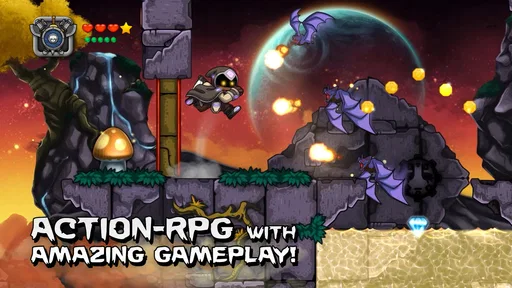
- Pixel-art visuals are colorful, detailed, and run well on modest devices.
- Local multiplayer adds extra value when playing with friends.
Limitations of Magic Rampage
- Some later levels can feel punishing without upgraded equipment.
- Energy and progression systems may encourage grinding between stages.
- Touch controls can feel cramped on smaller phone screens.
- The story is fairly light compared with the gameplay experience.
- Certain gear upgrades may take considerable time to unlock freely.
Similar Picks in This Category
View All
Hair Dye
CrazyLabs LTD4.4

Monster High™ Beauty Salon
CrazyLabs LTD4.5

Bus Simulator - Bus Games 3D
Jima Apps4.4

Flight Pilot: 3D Simulator
Wildlife Studios4.1


Super Stylist Fashion Makeover
CrazyLabs LTD4.4
Frequently Asked Questions
What is Magic Rampage?
Magic Rampage is a fast-paced 2D action platformer for Android and iOS that combines classic side-scrolling exploration with role-playing elements. You control a customizable hero, fight monsters, avoid traps, collect equipment, and explore dangerous stages filled with secrets. The game has a retro-inspired visual style, responsive controls, and enough variety to appeal to fans of old-school platform adventures.
Is Magic Rampage free to download and play?
Magic Rampage can generally be downloaded for free, although availability and pricing may vary slightly between the Google Play Store and Apple App Store. The game may include optional in-app purchases, advertisements, or premium content depending on the version and platform. You can begin playing without paying, but some items, conveniences, or additional content may require purchases.
Does Magic Rampage require an internet connection?
Many of Magic Rampage’s main platforming and campaign stages can be played offline, which makes it suitable for travel or situations without reliable mobile data. However, certain features may depend on an internet connection, including online events, leaderboards, account synchronization, advertisements, updates, and purchases. For the smoothest experience, connect to the internet when accessing these online services.
What gameplay features does Magic Rampage offer?
Magic Rampage combines combat, platforming, exploration, and character progression. Players can choose equipment that changes their abilities and play style, battle different enemies, overcome environmental hazards, and search levels for rewards. In addition to its main adventure, the game may include challenge-oriented content and competitive features, giving experienced players reasons to replay stages and improve their performance.
Is Magic Rampage suitable for children and casual players?
Magic Rampage is relatively easy to start because its controls are designed for touchscreens, but the game becomes more demanding as enemies, traps, and platforming challenges become more complex. It is generally appropriate for players who enjoy fantasy action and cartoon-style combat, though parents should review the store rating and in-app purchase settings. Younger players may need supervision when purchasing optional content.
Play our best games!


